
Panpepato
Holiday baking
Growing up in the Midwest, each year on a Saturday in early December, my mom and her friends would organize a cookie exchange. Everyone baked several dozen of their favorite Christmas cookies or candies, then gathered at someone’s house to swap—each person leaving with platters full of butter spritz cookies, ginger snaps, chocolate crinkles, fudge, and divinity. That was the 1970s, when Christmas baking was still mostly all from scratch and the most processed ingredient was the Hershey’s Kiss on top of the peanut butter blossoms.
When I moved to Italy in the early 1990s, I lost touch with traditional American Christmas cookie baking and instead became familiar with the holiday treats Stefano’s mom, Maria, makes each year around the holidays—tozzetti, mostaccioli, ciambelline al vino, and panpepato—recipes from Rome and the Lazio region where she grew up.
In Rome, Maria baked enough for all of us. After we moved to the States, I learned to make the Christmas sweets Stefano grew up with and that our boys and I came to cherish. Now, on Saturdays in December, when Stefano calls his mom, we trade notes on our holiday baking.
“Cara ha fatto i panpepati,” I’ll hear him say over the phone. Maria will ask us how they turned out and then update us on her own preparations—probably noting how expensive nuts have become and claiming that this year she’s going to cut back on her baking, which both know she won’t do.
Panpepato
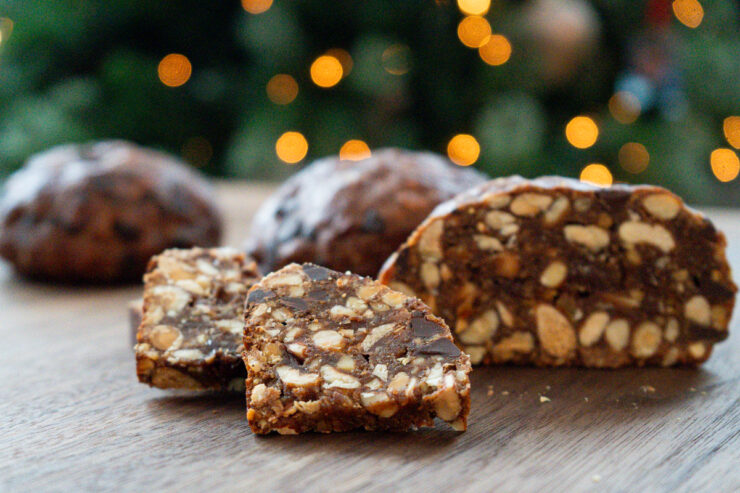
Panpepato—also called pampepato—is a traditional Christmas treat made across central Italy. Its name literally means “peppered bread,” but it’s not bread. Rather, it’s a sweet, dense confection made of nuts, chocolate, and dried or candied fruit, with a peppery kick.
Panpepato dates back to the Middle Ages, when spices, dried fruits, and chocolate were luxury goods reserved for special feasts. Rich and long-lasting, this winter sweet became a celebratory Christmas food and a symbol of good luck and abundance, believed to bring prosperity in the new year.
Each of Stefano’s aunts prepares panpepato a bit differently—likely because they all come from neighboring but distinct towns in the Roman countryside. Some add sultanas or raisins; others include dried figs or spices such as cinnamon, cloves, or nutmeg. Zia Elena tops hers with candied sprinkles, though more often you’ll see panpepati covered in a glossy chocolate glaze.
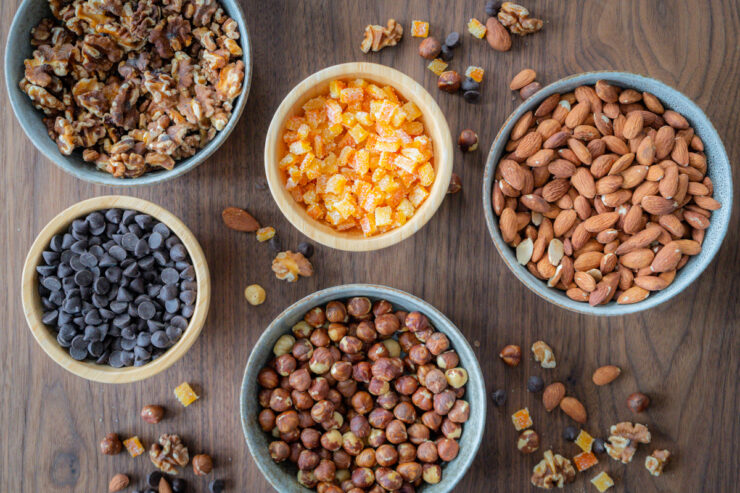
We make ours the way Stefano’s mom does: with nuts, chocolate, candied orange peel, black pepper for heat, and honey and flour to bind it all together. I like to toast the nuts first to bring out their flavor, and I usually make my own candied orange peel, because it’s hard to find here.
During the holidays, we enjoy panpepato with an espresso for breakfast or an afternoon coffee break, or served after dinner with a dessert wine.
Panpepato
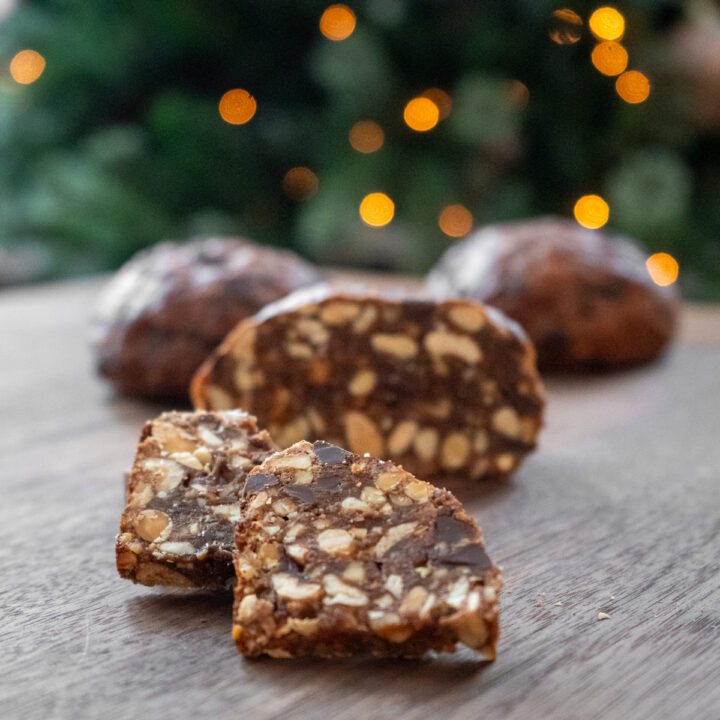
Panpepato, a traditional Christmas treat made across central Italy, is a sweet, dense confection made of nuts, chocolate, and dried or candied fruit, with a peppery kick.
Ingredients
- 150 grams hazelnuts
- 150 grams raw almonds
- 150 grams walnuts
- 200 grams dark chocolate chips
- 100 grams candied orange peel
- 100 grams flour
- 250 grams honey
- 1 teaspoon ground black pepper
- Vegetable oil, for handling
Instructions
- Preheat the oven to 350°F (180°C).
- Spread the nuts on baking sheets lined with parchment paper and toast for about 10 minutes, or until lightly browned and fragrant. Let them cool.
- Place the nuts, chocolate chips, orange peel, and honey in the bowl of a stand mixer. Mix on low speed until everything is evenly combined.
- Add the flour and black pepper and continue mixing on low until the flour is fully incorporated and the mixture becomes sticky.
- Lightly coat your hands with vegetable oil to make the mixture easier to handle. Shape the mixture into 3 small panpepato mounds and place them on a parchment-lined baking sheet.
- Bake at 350°F (180°C) for 20–30 minutes, or until the outside is firm and lightly toasted. Position the baking rack in the center of the oven to ensure even baking and prevent over-browning on the top or bottom.
- Allow the panpepati to cool completely before slicing and serving. Once cooled, wrap each whole panpepato tightly in plastic wrap and refrigerate.
Join our newsletter
Get regular Italian recipes, food & wine updates and travel tips. Bonus download: Ten Stunning Rooftop Restaurants in Rome!